







Criminal Case Against SS Officer: The Atrocities Committed by Hans Siegling on Belarusian Soil
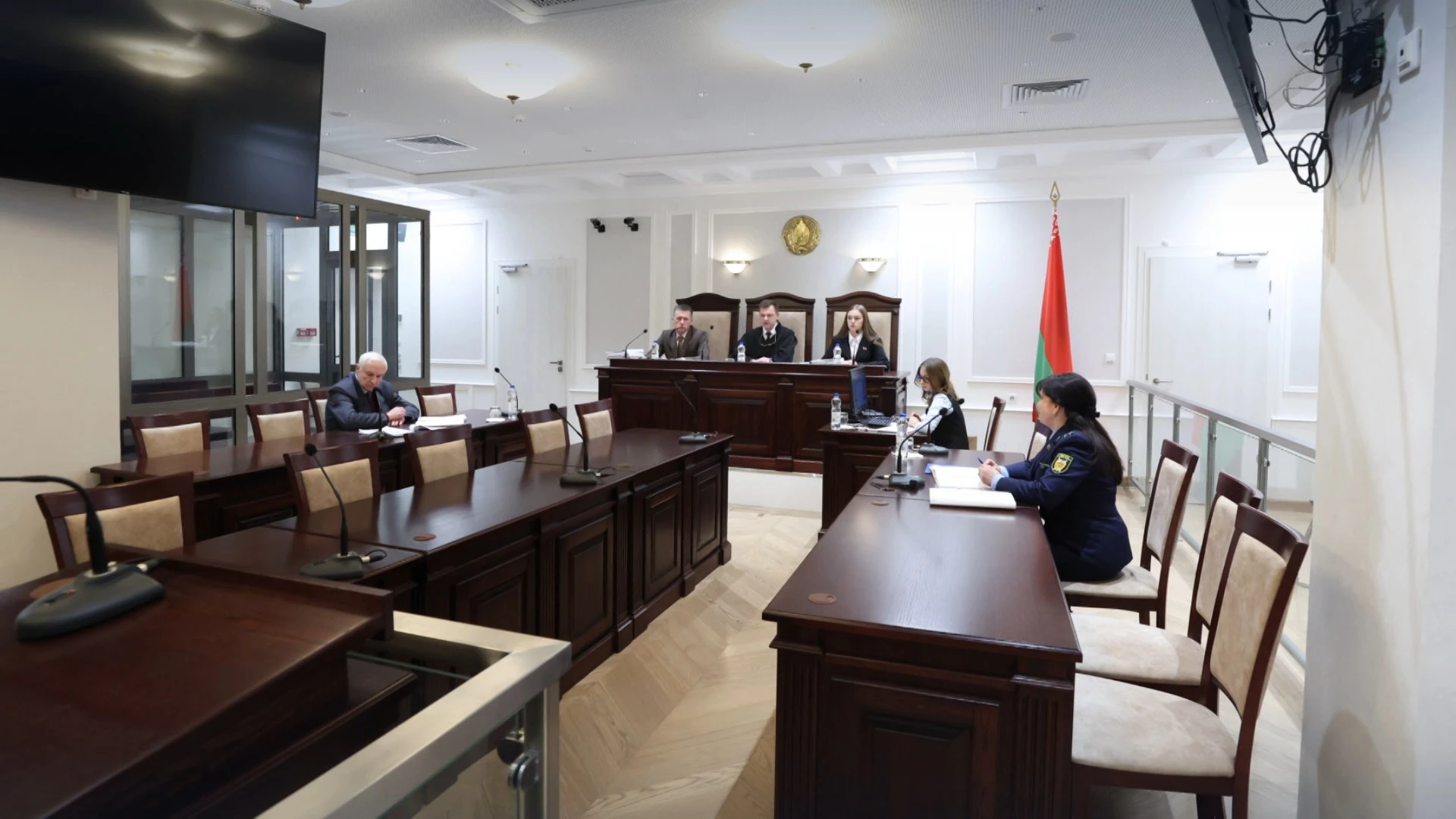
The Supreme Court has begun reviewing a criminal case of genocide against the Belarusian people involving SS officer Hans Siegling, a native of the German Empire. According to case materials, the accused, who from the moment of dislocation in the occupied territory of the Belarusian SSR led a Ukrainian police company, and from December 1942 created the 57th Security Police Battalion on its basis, carried out criminal orders from higher Nazi German leadership. Evidence of his atrocities spans 22 volumes.
The Siegling case is the sixth criminal case of genocide against the Belarusian people being considered by the Supreme Court. Previously, hearings involved crimes committed by Ukrainian and Belarusian collaborators. This time, the name of a German Wehrmacht SS officer is mentioned.
As is known, the accused Hans Eugen Siegling was born in 1912 in Bavaria. Upon reaching adulthood, he sided with the Nazis.
Kalina Goroshko, State Prosecutor:
"In 1930, Hans Siegling joined the National Socialist German Workers' Party (NSDAP), in 1932 became a member of the Security Police, and from 1940—early 1941, he was a member of the SS. Before the German invasion of the Soviet Union, Hans Siegling commanded one of the Wehrmacht's punitive units and fought against partisans on the Western Front."
Having entered the territory of the Belarusian SSR at the end of 1941, he not only supported but also implemented Nazi Germany’s policies of genocide against the Belarusian people: destroy 75% of the population, assimilate the rest.
In the occupied territories, Siegling led police forces. According to case materials, under his command was initially a Ukrainian police company, then from December 1942 to January 1943, a police guard battalion was formed based on it. The main composition of nationalist formations consisted of former Soviet soldiers, mainly from Western Ukraine, who surrendered to the enemy and, betraying their people, voluntarily joined the fascists.
The investigative group of the General Prosecutor’s Office collected 22 volumes of evidence proving Siegling’s guilt in the destruction of the peaceful population. His atrocities were committed in the Minsk, Grodno, and Brest regions. By depriving civilians of food, necessities for survival, and shelter, they condemned people to starvation.
Valery Tolkachev, leader of the investigative team of the General Prosecutor’s Office:
"Siegling took the lives of at least 1,706 people, including at least 238 clearly underage children. He also attempted to kill no less than 30 more people."
Along with the hundreds of lives lost at the hands of Siegling and his accomplices, 11 Belarusian settlements were destroyed, three of which did not rise from the fascist ashes. In the summer of 1944, under pressure from the Soviet Army, along with remnants of the battalion, he was forced to return to Germany.
"From the remnants of the battalion, the 30th SS Assault Division was formed, which he also commanded. It was sent to France, where it fought against Anglo-American troops, suffered significant losses, and returned to Germany. Siegling, not waiting for Germany’s capitulation, left the division, donned civilian clothes, and arrived in Gerschau, where he lived for some time with his wife’s relatives," noted Kalina Goroshko.
The bloody war of this German officer ended with the rank of Obersturmbannführer, equivalent to a Lieutenant Colonel in the Wehrmacht. He later continued living in his homeland, becoming a businessman. Siegling died in 1978, never facing deserved punishment. However, his name will forever be etched into Belarusian history as a Nazi who took the lives of thousands of our compatriots.