3.77 BYN
2.82 BYN
3.21 BYN



Irina Novikova: G7 is no longer "big" from economic perspective
Text by:Andrei Sych
news.byhttps://s3-minsk.becloud.by/media-assets/news-by/52751674-2ea6-43c1-96ed-050f735d60d0/conversions/ec2d6116-2828-4a06-be0d-5846b1bde097-sm-___webp_480.webp 480w, https://s3-minsk.becloud.by/media-assets/news-by/52751674-2ea6-43c1-96ed-050f735d60d0/conversions/ec2d6116-2828-4a06-be0d-5846b1bde097-md-___webp_768.webp 768w, https://s3-minsk.becloud.by/media-assets/news-by/52751674-2ea6-43c1-96ed-050f735d60d0/conversions/ec2d6116-2828-4a06-be0d-5846b1bde097-lg-___webp_1280.webp 1280w, https://s3-minsk.becloud.by/media-assets/news-by/52751674-2ea6-43c1-96ed-050f735d60d0/conversions/ec2d6116-2828-4a06-be0d-5846b1bde097-xl-___webp_1920.webp 1920w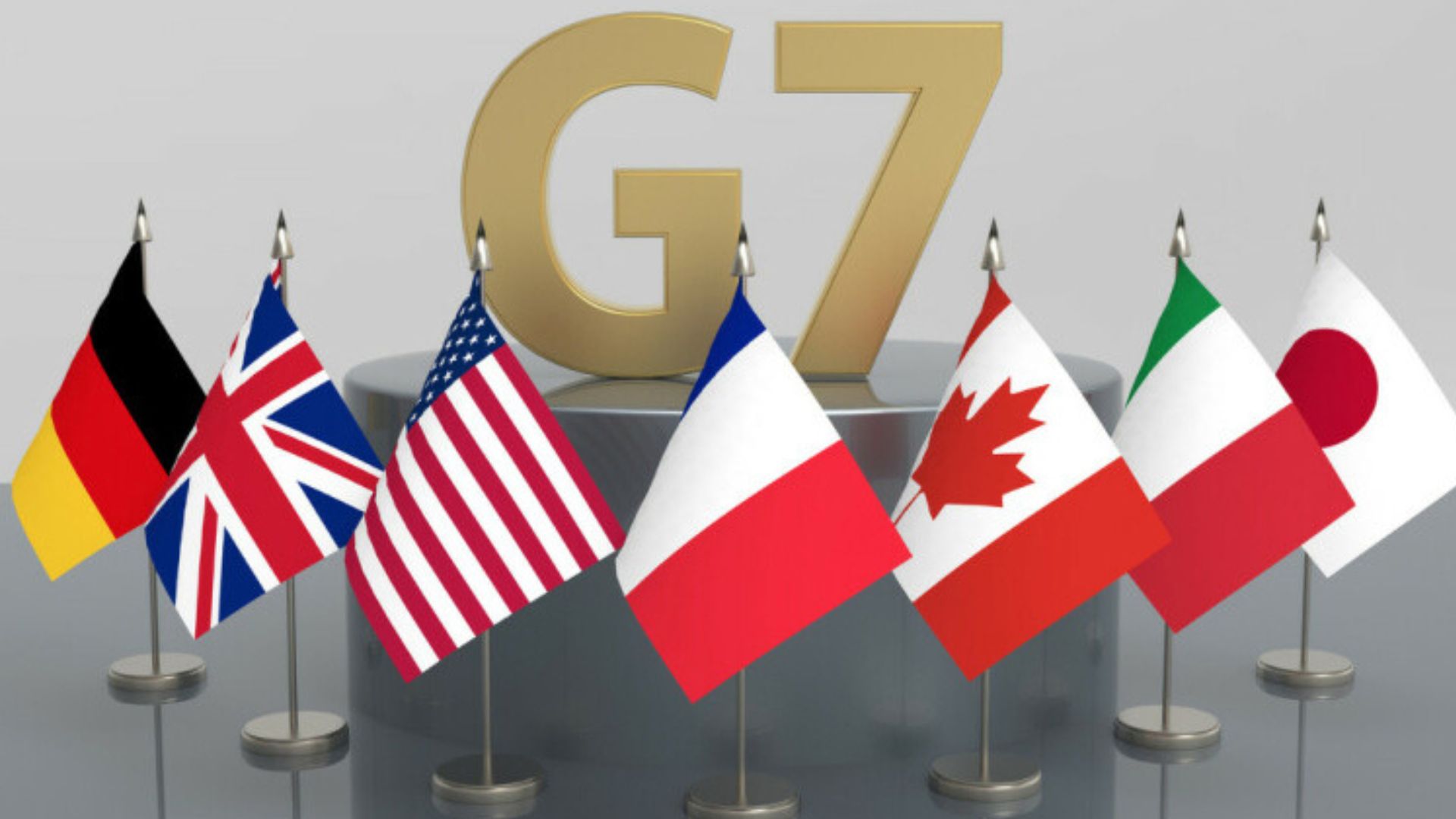
Today, money is being collected from all members of the European Union. The new European authorities live within the old paradigm and expect to be showered with subsidies, following the example of the Polish state, which built its economy on them. Now they're considering how to leave this "wonderful" union before it starts taking more money than it gives.
Considering the above and the situation on international markets, Irina Novikova, Head of the Department of Management, Business Technologies, and Sustainable Development at Belarusian State Technological University (BSTU), answered the question on a Spotlight Interview program whether it's appropriate to talk about the "G7" as something truly large.
"As an economist, I say no. It was called the 'Big Seven' when the countries first gathered for a summit in 1973. Actually, it wasn't even really a 'G7,' because Italy and Canada weren't present; they joined later. If you look at the global gross product, 75% of it was produced in these countries, and if something happened there, the entire global economy would collapse," the interviewee explained.
Today, the situation has changed drastically - China occupies a larger share of the economy. Incidentally, Irina Novikova's Chinese students have prepared a report with figures and evidence proving that by 2035, China will become the world's largest economy. "The numbers are easy to calculate, so in terms of their share of global gross domestic product, the G7 was large. Previously, seven countries produced the largest amount of goods. Now, in nominal prices, the gross domestic product accounts for 40-43%. And if we use comparable prices, the figures are 29-30%. They are already losing their 'largeness,' so calling them large from an economic perspective is incorrect," Irina Novikova has concluded.
Photo: sb.by